
Singapore Liquid Cooling Standard for Tropical AI Data Centers
Singapore has launched a new national standard for liquid-cooled data centers as AI infrastructure pushes operators toward higher-density computing. The Singapore liquid cooling standard, SS 726:2026, establishes requirements and recommendations for deploying liquid-cooled systems in data centers operating in tropical climates.
Enterprise Singapore and the Infocomm Media Development Authority announced the standard on August 27, describing it as the world’s first standard specifically designed to help data centers deploy liquid-cooling technologies in tropical conditions.
The development matters beyond Singapore. AI accelerators are pushing rack power and heat densities beyond the practical limits of conventional air cooling in many deployments, while operators in hot and humid markets face additional environmental and efficiency challenges.
1. What Singapore Has Introduced
SS 726:2026, formally titled “Liquid Cooling in Tropical Data Centers,” was jointly developed by IMDA and Enterprise Singapore through the Singapore Standards Council in consultation with industry.
The Singapore Standards catalog states that SS 726:2026 provides requirements and recommendations for deploying liquid-cooled systems within data centers located in tropical climate zones.
The standard addresses the growing requirement to support compute-intensive AI workloads while advancing Singapore’s wider effort to improve data center sustainability. It also builds on Singapore’s existing work around operating facilities efficiently in tropical environments.
2. Why AI Is Changing the Cooling Requirement
Traditional data centers have relied heavily on air cooling. That remains viable for many workloads, but the thermal characteristics of high-density AI systems are forcing operators to reconsider where heat should be removed.
Direct liquid cooling transfers heat much closer to processors and accelerators rather than depending entirely on large volumes of conditioned air. This becomes increasingly valuable as more computing power is concentrated into individual racks.
For Singapore, the challenge is particularly relevant because high ambient temperatures and humidity reduce some advantages available to facilities in cooler climates. Cooling systems must perform efficiently despite demanding outdoor conditions throughout the year.
3. The Standard Goes Beyond Cooling Hardware
The significance of SS 726:2026 is that liquid cooling is treated as an infrastructure system rather than simply a server feature.
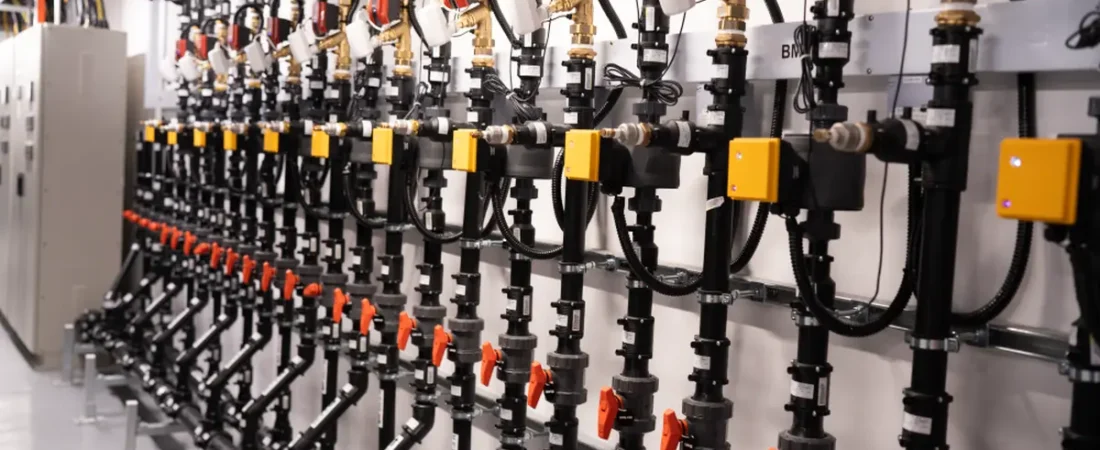
Successful deployment requires coordination between IT equipment and supporting facility systems. Operators need to consider coolant loops, heat rejection, water quality, piping, monitoring, maintenance, leak management, and operating procedures alongside server requirements.
That becomes particularly important when existing facilities are retrofitted for AI. A data hall designed around conventional air-cooled servers may have enough floor space for new AI racks but lack the mechanical infrastructure required to remove their heat effectively.
Our guide to closed-loop liquid cooling for AI data centers examines coolant distribution, facility loops, redundancy, and commissioning in greater detail.
4. Why Tropical Conditions Need Specific Guidance
Tropical data centers operate with consistently high temperatures and humidity. These conditions affect heat rejection, condensation risk, water treatment, corrosion management, equipment selection, and the number of hours when free cooling is practical.
Designers must define supply-water temperatures that protect IT equipment while allowing the facility to reject heat efficiently. They also need controls that prevent condensation when coolant temperatures approach the local dew point.
A national standard can establish a common technical baseline for owners, consultants, equipment manufacturers, integrators, and operators making these decisions.
5. Why the Standard Matters Outside Singapore
The Singapore liquid cooling standard could influence other tropical data center markets in Southeast Asia and beyond.
AI infrastructure is expanding in locations where operators cannot assume cool outside-air conditions. Malaysia, Indonesia, Thailand, and other fast-growing digital infrastructure markets face similar questions around high-density computing, cooling efficiency, climate, and water use.
A formal national standard gives designers and operators another technical reference when evaluating liquid-cooling deployments under these conditions. It may also reduce uncertainty between data center operators, vendors, consultants, and customers by providing a shared implementation framework.
6. Operational Discipline Will Matter
Liquid cooling can improve thermal performance, but it changes data center operations.
Facilities teams may need to manage coolant distribution units, pumps, valves, filters, manifolds, hoses, water chemistry, and leak-detection systems alongside conventional mechanical infrastructure.
Responsibilities between IT teams, facility operators, and equipment vendors must be clear. A cooling architecture that performs well on paper can still create risk when technicians are not trained to maintain it or when ownership of alarms and emergency procedures is ambiguous.
An AI-ready data center operations program should incorporate training, spares, maintenance procedures, leak drills, alarm escalation, and recovery testing before production workloads arrive.
7. Practical Tropical Liquid-Cooling Checklist
- Define rack requirements: document heat loads, flow, pressure, coolant temperature, and redundancy for each hardware platform.
- Model tropical conditions: evaluate ambient temperature, humidity, dew point, seasonal variation, and worst-case heat rejection.
- Control water quality: specify coolant chemistry, filtration, sampling, corrosion protection, and maintenance responsibilities.
- Prevent condensation: coordinate coolant temperatures, humidity controls, sensors, alarms, and operating limits.
- Plan leak response: deploy detection, isolation valves, drainage, spare parts, escalation procedures, and drills.
- Integrate facility systems: coordinate CDUs, pumps, piping, controls, power, building automation, and monitoring.
- Commission the complete loop: test capacity, failures, failover, alarms, controls, and workload conditions before handover.
What Happens Next
SS 726:2026 is listed as a current Singapore Standard, giving operators, designers, and suppliers a formal framework for liquid-cooling deployments in tropical data centers.
The next question is how broadly its recommendations influence new projects and retrofit programs. Singapore has limited land and energy resources but remains an important regional data center market. Supporting additional AI capacity requires operators to extract more useful computing from constrained infrastructure without allowing cooling demands to grow unchecked.
Industry leaders should watch whether the standard becomes a reference in customer specifications, engineering contracts, commissioning plans, and regional development requirements.
Frequently Asked Questions
What is SS 726:2026?
SS 726:2026 is Singapore’s national standard titled “Liquid Cooling in Tropical Data Centers.” It provides requirements and recommendations for deploying liquid-cooled systems in tropical data center environments.
Why does Singapore need a tropical liquid-cooling standard?
High ambient temperature and humidity affect heat rejection, condensation management, efficiency, water treatment, and equipment operation. Tropical facilities therefore face design and operational conditions that differ from cooler markets.
Does the standard apply only to new data centers?
The framework is relevant to both new developments and retrofits, although existing facilities can face additional constraints involving piping, heat rejection, space, power, controls, and operational integration.
Why is liquid cooling important for AI infrastructure?
Modern accelerators concentrate large amounts of power and heat inside each rack. Liquid cooling removes heat closer to processors, enabling higher densities than air cooling alone can support efficiently in many deployments.
Conclusion
Singapore’s new liquid cooling standard arrives when cooling architecture is becoming a strategic data center decision.
AI has changed the thermal problem. Operators can no longer assume that infrastructure designed for conventional server densities will accommodate successive generations of accelerators.
SS 726:2026 provides Singapore with a common framework for addressing that transition under demanding tropical conditions. For leaders elsewhere, the development is worth watching as liquid cooling moves from a specialist high-performance technology toward a fundamental part of AI-ready facility design.