
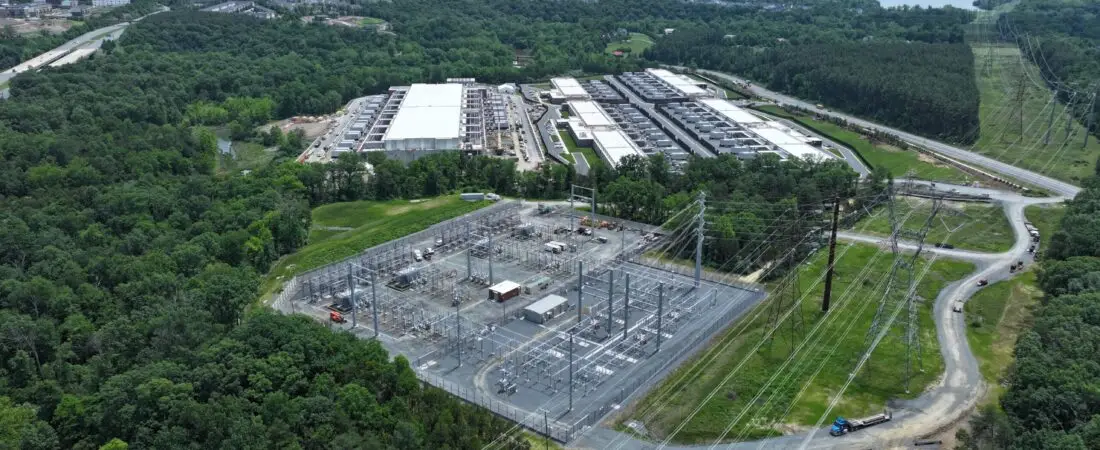
Data center site selection once began with land, fiber, electricity prices, incentives, natural-disaster risk, and proximity to customers. Those factors still matter, but in 2026 one constraint increasingly determines whether the rest of the checklist is relevant: can the site obtain enough power, on an acceptable timetable, to support the planned facility?
The shift is especially important for AI infrastructure. Proposed campuses can require hundreds of megawatts or several gigawatts, turning what was primarily a real-estate decision into an energy-infrastructure strategy. Developers now evaluate transmission, generation, substations, grid queues, onsite power, water, permitting, and community acceptance much earlier.
For CIOs, CTOs, colocation providers, and investors, the best location is no longer necessarily the site with the cheapest electricity or strongest incentives. It may be where usable power can actually be delivered when customers need it.
Executive Summary
Power availability is reshaping site selection as cloud and AI demand grows faster than electrical infrastructure in many established markets. Uptime Institute research notes that grid connection lead times in constrained regions can exceed five years. The International Energy Agency also reports that more than 2,500GW of generation, storage, and large-load projects, including data centers, are stalled in connection queues worldwide.
Developers are responding with combinations of utility power, onsite generation, renewable energy, storage, and dedicated infrastructure. Yet water, fiber, regulation, construction resources, environmental constraints, and community acceptance can still make an apparently attractive power site commercially unsuitable. The goal is not one ideal characteristic, but a location where critical infrastructure systems can scale together.
Why Power Now Comes First
A data center cannot monetize capacity that cannot be energized. A conventional development may work within existing utility capacity or wait for a modest substation upgrade. A multi-hundred-megawatt campus can require new substations, transmission lines, generation, transformers, switchgear, and regulatory approvals.
The problem intensifies when developers target the same market. Capacity that appears available during early evaluation may already face competing requests. Utilities must determine whether generation and transmission systems can support additional load without compromising reliability.
A five-year connection delay can overwhelm every other advantage. Saving money on land or electricity provides little value if the facility cannot serve customers until years after its intended launch.
AI Has Changed The Scale
AI is not the only source of demand, but it has changed expectations about scale. Uptime Intelligence has identified more than 350 publicly announced projects exceeding 100MW since early 2021. Its analysis of 2025 proposals found approximately 181GW of planned power, with North America representing roughly 80%.
Not every project will reach its announced scale. Proposed megawatts and deliverable megawatts are different. The largest AI campuses increasingly resemble industrial energy projects requiring coordinated land acquisition, generation development, transmission construction, fuel supply, environmental permits, water infrastructure, and long-lead electrical equipment.
Real-estate expertise remains necessary, but energy-market knowledge has become equally important.
Grid Capacity Is More Than A Megawatt Number
Substantial regional generation does not mean a particular site can obtain the required capacity. Electricity must reach the facility through transmission and distribution infrastructure capable of carrying the load, and network constraints can limit practical availability.
Developers need to know how much capacity exists today, what can be contracted, which infrastructure must be built, who pays for it, how long interconnection takes, and what conditions apply. Reliability also matters. Uptime Institute identifies power as the leading cause of impactful outages and grid constraints as an emerging pressure.
Onsite Generation Changes The Geography
When utility power cannot arrive quickly enough, onsite generation becomes attractive. Natural-gas generation, fuel cells, renewable energy, battery storage, and hybrid systems can supplement traditional connections.
This can make sites outside established hyperscale markets viable when they offer gas infrastructure, renewable resources, transmission access, land, and supportive permitting. But dedicated generation introduces dependencies. Gas turbines need fuel and emissions permits. Renewable output is intermittent and may require extensive land. Batteries provide flexibility but are not an unlimited energy source.
The real question is not whether a site has grid power, but whether it can support a reliable and financeable energy architecture.
Water And Fiber Remain Essential
Power should not obscure water. Cooling needs vary by climate, IT density, architecture, and operating strategy. Direct-to-chip liquid cooling removes heat efficiently from equipment, but facilities must still reject that heat. Evaporative systems may reduce electrical demand while consuming water. Air cooling reduces water use but can increase electricity requirements or equipment footprint.
Leaders should assess water availability, quality, wastewater capacity, drought exposure, competing demand, and political attitudes toward industrial consumption before committing to a location.
Connectivity is equally non-negotiable. Cloud regions, colocation facilities, and enterprise infrastructure require resilient paths to customers, exchanges, carriers, other facilities, and cloud ecosystems. Teams should examine carrier diversity, physically separate routes, route ownership, latency, available capacity, and the possibility that supposedly diverse services share infrastructure.
Permitting And Community Acceptance
Even a site with power, water, and fiber can fail if approvals cannot be secured on a commercially useful timetable. Developments may require planning permission, environmental permits, grid approvals, water agreements, generator air permits, construction permits, and authorization for transmission or generation infrastructure.
Regulatory risk is therefore schedule risk. A technically viable gas-generation strategy may add emissions, fuel-supply, and permitting requirements. Teams should evaluate the entire approval chain rather than focus only on the building permit.
Community acceptance has also become infrastructure. Large developments affect electricity systems, water, land use, construction traffic, noise, tax policy, and planning. Residents want credible information about local benefits and costs. Data centers generate substantial construction activity and capital investment, but permanent employment may appear modest compared with their physical scale and consumption.
Engagement should begin before opposition hardens. Without local acceptance, land and megawatts may remain unusable.
Incentives And Construction Capacity
Tax exemptions can improve project economics, especially when enormous amounts of IT and electrical equipment are purchased. But incentives should be evaluated after infrastructure viability. A generous package cannot compensate for a five-year power delay, weak fiber diversity, unreliable water, or uncertain permitting. Total deployment risk matters more than the headline subsidy.
Developers also compete for transformers, switchgear, generators, cooling equipment, skilled trades, engineers, and experienced operators. Uptime Institute reports that more than half of surveyed operators struggle to find qualified candidates.
How To Evaluate A Site In 2026
A robust process begins by defining the workload and its real requirements before searching for attractive land. Key questions include:
- How much firm power is available today, and what depends on future construction?
- What is the realistic energization date?
- Who funds transmission, substations, generation, and grid upgrades?
- Can the energy architecture scale through later phases?
- Which water resources and cooling strategies are viable long term?
- Are high-capacity fiber routes genuinely diverse?
- Which utility, environmental, and planning approvals control the schedule?
- Can regional labor and equipment supply support construction?
- Is sufficient technical talent available for operations?
- How strong is political and community support?
- What happens to economics when power, construction, or permits are delayed?
Teams should validate every infrastructure assumption through contracts, engineering studies, schedules, and independent technical review.
Why Secondary Markets Matter
Traditional hubs combine network density, customers, labor, utilities, suppliers, and proven operating environments. Their success can also become their constraint. When power diminishes and queues lengthen, developers examine secondary markets where land and energy can scale more easily.
Established hubs will not disappear because their connectivity and ecosystems remain valuable. Instead, infrastructure may become more geographically specialized. Latency-sensitive services can remain near population and network centers, while large AI training clusters may move toward locations where land and power are available at scale.
Future Outlook
The power constraint will not disappear quickly. The IEA says annual global grid investment must rise roughly 50% from about $400 billion by 2030 to meet forecast demand, alongside expansion of grid supply chains.
Developers will enter new markets, reserve capacity earlier, fund utility infrastructure, build dedicated generation, add storage, design flexible loads, and develop campuses in phases. The industry must also become more realistic about announced capacity. Deliverability matters more than ambition.
Frequently Asked Questions
What Is The Most Important Site-Selection Factor?
No factor determines every project, but power availability and energization timing are critical for large developments. A viable site must also satisfy connectivity, water, permitting, resilience, construction, workforce, and commercial requirements.
Why Are Data Centers Moving To New Markets?
Established hubs can face limited power, long connection queues, expensive land, and regulatory pressure. Secondary markets may offer energy and land, but developers must weigh those benefits against connectivity, labor, supply-chain, and ecosystem limitations.
Can Onsite Power Solve Grid Constraints?
It can reduce immediate grid dependence, but introduces fuel, permitting, emissions, capital, maintenance, and resilience requirements. It is one part of the energy architecture, not a universal substitute for the grid.
Conclusion
Data center site selection is becoming an exercise in infrastructure orchestration. Land, fiber, water, incentives, climate, construction costs, and customer proximity still matter, but none can compensate for a power strategy that cannot be delivered on time.
Even power cannot be evaluated alone. Generation, transmission, stability, cooling, water, permitting, community support, and construction resources interact. The best site is not necessarily the one advertising the most megawatts, but the location where those megawatts can realistically become operating capacity.
In 2026, that distinction is rewriting the data center map.