nVent Maverick Power Acquisition: 7 Critical Data Center Impacts
nVent Maverick Power acquisition plans will expand nVent’s position in data center electrical infrastructure as AI deployments increase demand for higher-capacity and increasingly complex power distribution systems. The $1.75 billion transaction will add low- and medium-voltage switchgear, switchboards, integrated modular power solutions, and associated services to nVent’s portfolio.
The definitive agreement announced by nVent on August 24th also includes potential additional cash consideration of up to $550 million if specified performance metrics are achieved in 2027 and 2028.
nVent Maverick Power Acquisition: Key Facts
- The initial purchase price is $1.75 billion, subject to customary adjustments.
- Potential performance-based consideration could add up to $550 million.
- Maverick Power is expected to generate approximately $700 million in 2026 revenue.
- The transaction is expected to close in the fourth quarter of 2026.
- nVent plans to use available cash and new debt to fund the acquisition.
What nVent Is Acquiring
Maverick Power is headquartered in McKinney, Texas, and employs approximately 900 people across Texas and Arizona. nVent expects the business to generate approximately $700 million in revenue during 2026 and says it has a strong backlog and future demand visibility.
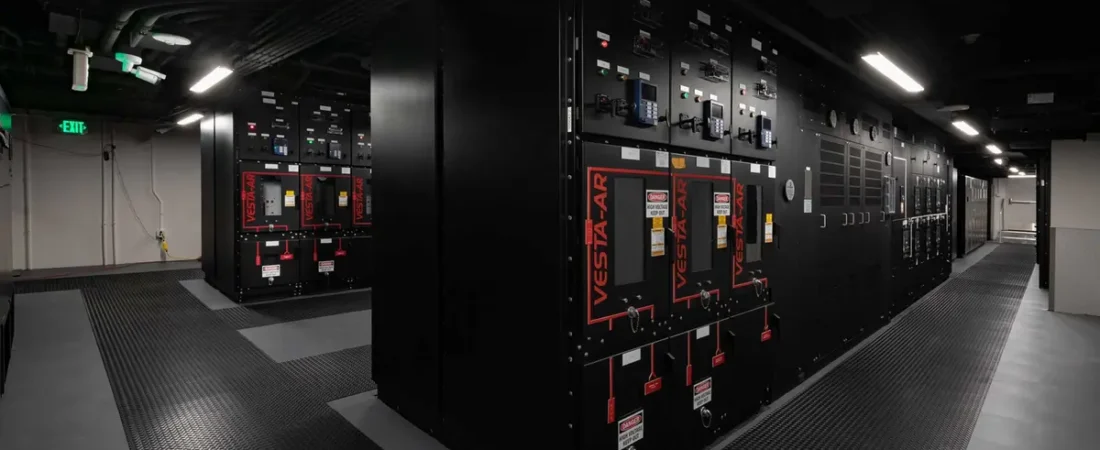
The company’s portfolio includes low-voltage switchgear and switchboards, medium-voltage switchgear, integrated modular solutions, and services used to distribute electricity through data center infrastructure.
nVent expects the transaction to close during the fourth quarter of 2026, subject to regulatory approval and customary closing conditions. It plans to fund the acquisition through a combination of cash and new debt.
Why Power Distribution Has Become Strategic
The nVent Maverick Power acquisition comes as data center electrical architecture is being reshaped by AI.
Accelerated computing is increasing rack densities and overall campus power requirements. Developers are also exploring medium-voltage distribution, modular electrical systems, onsite generation, battery storage, and alternative power architectures to deploy capacity faster and reduce losses.
That makes switchgear and power distribution more strategically important than their traditional position as supporting facility equipment might suggest.
Securing utility capacity is only one part of the problem. Once electricity reaches a campus, operators still need to transform, protect, switch, monitor, and distribute that power safely to increasingly dense IT loads. The same challenge is driving investment in AI data center microgrids and onsite power systems.
The Deal Expands nVent’s Data Center Portfolio
nVent already supplies electrical connection and protection systems to data center customers. Maverick adds a broader power-distribution platform that the company says will complement its existing offerings and support new data center power architectures.
nVent is paying an enterprise-value multiple of approximately 11.5 times Maverick’s anticipated 2026 adjusted EBITDA based on the initial $1.75 billion purchase price. The company expects the acquisition to increase adjusted earnings per share during the first year after completion.
Those expectations remain forward-looking and depend on successful completion and integration of the business. Regulatory approval, financing, customer retention, employee retention, and operational integration could all affect the eventual outcome.
Seven Impacts For Data Center Operators
- Broader system offerings: nVent can combine more electrical connection, protection, switchgear, and modular power capabilities.
- Faster deployment potential: integrated modular power systems may reduce onsite assembly and coordination requirements.
- Greater supplier concentration: customers may source more infrastructure from one vendor, increasing the importance of contractual safeguards.
- More focus on medium voltage: larger AI campuses are evaluating architectures that distribute power at higher voltages closer to dense loads.
- Manufacturing capacity matters: switchgear availability can determine whether technically secured utility power becomes usable on schedule.
- Integration risk remains: combining product portfolios and operating teams takes time and may affect delivery performance.
- Power becomes strategic: electrical distribution choices increasingly influence facility cost, resilience, and speed to capacity.
What The Acquisition Means For Infrastructure Leaders
For operators, the more significant trend is consolidation around increasingly complex facility infrastructure.
AI data centers require computing, networking, cooling, and electrical systems to be designed more closely together. Higher rack densities can change everything from busway capacity and switchgear selection to redundancy strategy and liquid-cooling architecture.
Vendors able to provide larger portions of that infrastructure may gain an advantage as customers seek to reduce integration risk and accelerate deployment.
There is a trade-off. Greater system-level integration can simplify design and procurement, but infrastructure leaders still need to protect interoperability and avoid unnecessary dependence on a single supplier. Specifications should preserve competitive alternatives for equipment, controls, service, and future expansion.
Supply Chains Remain Part Of The Risk
The transaction also highlights the importance of manufacturing capacity.
Power equipment has become a potential constraint for new data center projects alongside grid capacity, transformers, generators, cooling systems, and skilled construction labor. Large campuses require substantial quantities of electrical equipment, often on demanding construction schedules.
For CIOs and infrastructure executives, supplier capacity therefore belongs in project risk assessments. A theoretically available megawatt has little commercial value if the equipment required to distribute it cannot arrive when the data hall is ready.
Operators should validate factory capacity, component sourcing, testing procedures, delivery schedules, commissioning resources, and replacement-part availability before committing to an electrical architecture. Those issues should be evaluated alongside the wider data center site-selection strategy.
What Happens Next
The companies will work toward closing the transaction in the fourth quarter, assuming regulatory and other conditions are satisfied.
After completion, the key question will be how effectively nVent combines Maverick’s switchgear and modular power capabilities with its existing data center electrical and infrastructure portfolio.
The acquisition also indicates where suppliers expect infrastructure spending to move. AI investment is not benefiting only semiconductor companies. It is pulling capital into the less visible electrical systems required to turn utility capacity into usable computing capacity.
Frequently Asked Questions
How Much Is nVent Paying For Maverick Power?
nVent agreed to an initial purchase price of $1.75 billion, subject to customary adjustments. Up to $550 million in additional cash consideration could be paid if specified performance targets are achieved.
When Is The Transaction Expected To Close?
nVent expects the acquisition to close during the fourth quarter of 2026, subject to regulatory approval and customary closing conditions.
Why Does Maverick Power Matter To Data Centers?
Maverick supplies switchgear, switchboards, modular power solutions, and services that distribute and protect electricity inside data center campuses.
What Is The Main Risk For Operators?
Operators must balance the benefits of integrated procurement against supplier concentration, interoperability, manufacturing capacity, integration, and delivery-schedule risks.
Conclusion
nVent’s $1.75 billion Maverick Power acquisition is ultimately a bet on the electrical infrastructure behind the AI data center boom.
As facilities grow larger and racks become denser, the industry needs more than additional generation. Electricity must be distributed through increasingly sophisticated architectures while maintaining safety, resilience, efficiency, and deployment speed.
For data center leaders, that makes power-distribution equipment part of the strategic supply chain. The next AI cluster may be defined by its accelerators, but those accelerators cannot operate until the electrical infrastructure behind them is ready.