
Sivers AI Data Center Photonics: $30M Glasgow Expansion
Sivers AI data center photonics investment is moving forward in Glasgow, Scotland, where Sivers Semiconductors plans to spend $30 million expanding its photonics manufacturing operation. The program is designed to increase production capacity for Indium Phosphide, or InP, laser technology used in high-speed optical connectivity as AI clusters place greater demands on data center networks.
Sivers announced the expansion on September 3. Once completed, the facility is expected to support annual production of more than 100 million continuous-wave distributed feedback, or CW DFB, lasers. The program will begin during the second half of 2026, and the expanded operation is expected to become operational in the fourth quarter of 2027.
The investment indicates that the AI infrastructure buildout is moving upstream from accelerators, switches, and optical modules into the semiconductor manufacturing capacity required to produce them. For operators planning large GPU clusters, the availability of optical components may increasingly influence when network capacity can be delivered.
Sivers Is Expanding Its Glasgow Manufacturing Capacity
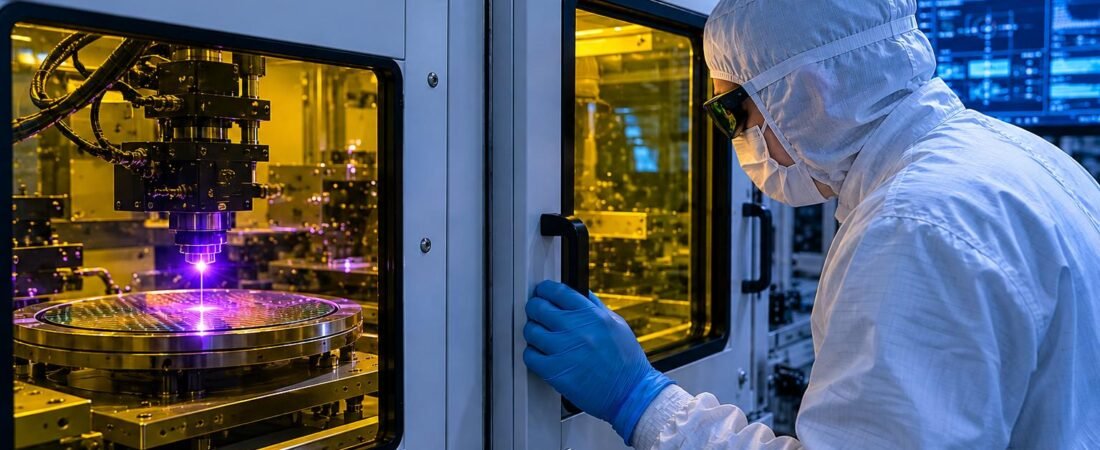
Sivers said the investment will add manufacturing capacity, new process capabilities, increased automation, and greater production flexibility at its Glasgow operation. The site specializes in compound-semiconductor photonics, including InP devices that can generate or amplify optical signals.
The company is also changing its manufacturing strategy. Rather than relying primarily on a fab-lite approach, Sivers is moving toward what it calls a Hybrid Manufacturing model. The strategy combines internal production with external foundry, packaging, and manufacturing partners.
Sivers said the Glasgow expansion will complement manufacturing relationships in Asia, providing internal control over core photonics technologies while retaining access to external production capacity. This approach is intended to improve scale, flexibility, and supply resilience as customers progress from product development to higher-volume deployments.
Key Facts About the Sivers Investment
| Measure | Announced position |
|---|---|
| Investment | $30 million |
| Location | Glasgow, Scotland |
| Core technology | Indium Phosphide photonics |
| Target capacity | More than 100 million CW DFB lasers annually |
| Program start | Second half of 2026 |
| Expected operation | Fourth quarter of 2027 |
| Manufacturing model | Internal production plus external partners |
The capacity target is forward-looking. Sivers has not said that customers have already contracted the entire future output, and the figure should not be interpreted as confirmed shipments. The company is investing in preparation for anticipated customer production ramps across AI data center and advanced optical-interconnect applications.
AI Is Increasing Pressure on the Optical Supply Chain
Large GPU clusters require enormous communication bandwidth between accelerators, switches, racks, clusters, and increasingly separate data center buildings. Training and inference performance can be constrained when network latency, congestion, or component availability prevents expensive processors from exchanging data efficiently.
As interfaces move toward higher speeds, optics account for a larger share of the physical infrastructure connecting compute. Sivers expects InP-based lasers and semiconductor optical amplifiers to play an increasingly important role in these systems. The manufacturing challenge is therefore becoming one of repeatable scale as well as device performance.
This pressure is visible in the transition from 400G to 800G Ethernet for AI data centers and the developing move toward 1.6T connectivity. Higher aggregate bandwidth typically requires improvements across lasers, modulators, optical engines, packaging, connectors, fiber, digital signal processing, thermal design, and manufacturing yield.
Why Indium Phosphide Matters
Indium Phosphide is a compound-semiconductor material widely used for high-performance optoelectronic devices. It is valuable because it can efficiently emit and manipulate light at wavelengths commonly used in fiber-optic communications.
CW DFB lasers provide a stable optical source that can feed high-speed links and advanced optical architectures. Semiconductor optical amplifiers can strengthen optical signals or support more complex photonic systems. These components sit below the finished transceiver or switching platform but are essential to its operation.
For data center leaders, this manufacturing layer can be easy to overlook. Operators procure switches and modules, yet the delivery schedule for those products depends on wafers, lasers, photonic dies, packaging, testing, and assembly capacity distributed across multiple suppliers and regions.
More Than 100 Million Lasers a Year Is the Target
The scale of the target illustrates the volume that AI networking suppliers anticipate. A single optical module can contain multiple optical components, and a large cluster may require many links for scale-up, scale-out, storage, management, and inter-building connectivity.
However, installed production capacity does not guarantee demand, acceptable yields, or customer qualification. Sivers must execute the facility upgrade, install and qualify processes, achieve targeted throughput, and convert customer engagement into production orders.
Customers will also evaluate device performance, reliability, consistency, cost, and interoperability. In photonics, qualification cycles can be demanding because failures in a small component can affect a much more valuable network link or computing system.
Supply Resilience Is Becoming Part of AI Network Design
A hyperscale AI cluster can require substantial quantities of lasers, transceivers, connectors, and fiber. If critical component production cannot keep pace with switches and accelerators, networking can become a deployment constraint even when GPUs, buildings, power, and cooling are available.
Sivers plans to combine expanded European manufacturing with external partners, creating geographic and production flexibility. A hybrid strategy can offer alternative capacity and specialist capabilities, although it also requires careful quality control, intellectual-property protection, forecasting, and coordination between fabrication, packaging, testing, and final assembly.
For operators, the announcement shows why supply planning must extend below the switch level. Our AI network fabric design guide examines the architectural decisions, but those designs ultimately depend on physical components arriving in volume.
The Investment Reflects a Wider Optical Shift
Sivers is not alone in attracting investment around AI networking. On September 2, silicon-photonics company iPronics announced a $125 million Series B financing round co-led by Maverick Silicon and Light Street Capital, with NVIDIA participating.
iPronics is developing programmable optical circuit switching intended to let AI clusters reconfigure connectivity dynamically. Its rack-ready platform combines optical switching with control, telemetry, and APIs designed to improve GPU utilization while managing power and network complexity.
Together, the announcements show investment moving into several layers of the optical stack: laser manufacturing, optical engines, transceivers, programmable switching, packaging, and production capacity. NVIDIA’s separate 2026 partnership with Coherent, which included a $2 billion investment, further demonstrates the strategic value being assigned to optics.
What Data Center Operators Should Watch
- Execution: whether the Glasgow program starts and reaches qualification on schedule.
- Customer ramps: whether anticipated engagements become volume orders.
- Manufacturing yield: whether automation and new processes deliver consistent output economically.
- External capacity: how Sivers coordinates Asian foundry, packaging, and manufacturing relationships.
- Technology transitions: how demand changes as networks move from 800G toward 1.6T.
- Supply concentration: whether operators and vendors gain meaningful geographic resilience.
Operators should also align network procurement with compute delivery. Buying accelerators without confirmed switching, optics, cabling, and fiber can leave expensive systems underutilized. The same applies to GPU cluster architecture, where topology and component availability must be planned as one system.
What Happens Next
Sivers expects the expansion to become operational during the fourth quarter of 2027. Between now and then, the company must expand the facility, introduce equipment and processes, increase automation, and prepare production flows for customer qualification.
The important indicators will be how quickly AI networking programs enter volume production and whether Sivers converts greater capacity into shipments. Investors and customers should distinguish manufacturing potential from contracted demand while monitoring capital deployment, operational milestones, and customer announcements.
Data center operators should watch the wider optical supply chain as 800G deployments grow and the industry prepares for 1.6T. Procurement teams may need earlier engagement with networking vendors, alternative sourcing strategies, stronger capacity commitments, and more detailed visibility into component lead times.
Frequently Asked Questions
How much is Sivers investing in Glasgow?
Sivers Semiconductors plans to invest $30 million in its Glasgow photonics manufacturing operation.
What will the expanded facility produce?
The facility is expected to support production of more than 100 million CW DFB lasers annually, alongside additional InP process capabilities.
When is the expansion expected to become operational?
The program is expected to begin in the second half of 2026 and become operational during the fourth quarter of 2027.
Is the future production capacity already contracted?
Sivers has not stated that the full target capacity is contracted. It is preparing for anticipated customer production ramps.
Conclusion
The AI infrastructure race is increasingly a networking-manufacturing race. Larger GPU clusters require more than accelerators, power, and cooling. They require a rapidly expanding supply of lasers, optical modules, switches, fiber, and connectivity components capable of moving data at higher speeds.
Sivers’ $30 million Glasgow expansion is one example of suppliers preparing before the next generation of AI networks reaches full deployment scale. Its success will depend on execution, qualification, manufacturing yield, and actual customer demand.
For data center leaders, the implication is straightforward: optical infrastructure availability may become as important to deployment schedules as compute availability. Network architecture and component supply can no longer be treated as downstream details after GPU procurement. They are critical-path elements of AI capacity planning.