SLB Kelvion Acquisition: $4.1B AI Cooling Deal
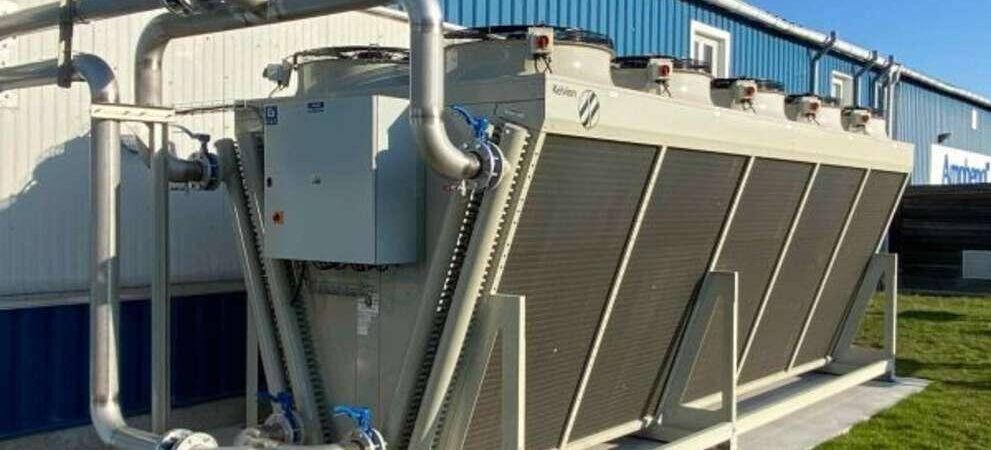
The SLB Kelvion acquisition will expand the energy-technology company’s position in data center infrastructure as AI drives demand for more powerful cooling systems. SLB has agreed to acquire thermal-management specialist Kelvion in a transaction valued at approximately $4.1 billion, adding a major portfolio of heat exchangers and cooling technologies used across data centers, energy infrastructure, and industrial applications.
The agreement was announced on August 31, 2026. According to the official SLB announcement, SLB will pay approximately $3.4 billion in cash and assume around $700 million of Kelvion debt. The transaction remains subject to regulatory approvals and customary closing conditions and is expected to close during the first half of 2027.
SLB Kelvion Acquisition At A Glance
| Transaction detail | Announced figure |
|---|---|
| Cash consideration | Approximately $3.4 billion |
| Debt assumed | Approximately $700 million |
| Total transaction value | Approximately $4.1 billion |
| Expected closing | First half of 2027 |
| Expected annual EBITDA synergies | Approximately $120 million within three years |
Kelvion is majority owned by Apollo-managed funds, while funds advised by Triton hold a minority interest that will also be acquired. The Kelvion transaction announcement describes data centers as the company’s largest and fastest-growing segment.
Why SLB Is Buying Kelvion
SLB is best known for its energy technology and oilfield-services businesses, but it has been building a broader data center infrastructure strategy around power, engineering, modular construction, digital capabilities, and industrial technology. Kelvion adds thermal-management expertise at a time when AI systems are concentrating far more heat into individual racks.
Direct liquid cooling, higher-temperature water loops, heat exchangers, cooling distribution systems, and facility heat rejection are becoming increasingly important as operators deploy dense GPU infrastructure. SLB says Kelvion will strengthen its Data Center Solutions business and help customers address the growing infrastructure complexity associated with AI.
The combination also expands the amount of infrastructure SLB can supply for each gigawatt of data center capacity. Kelvion brings equipment and engineering knowledge that can connect the IT cooling loop to wider facility systems, complementing SLB’s existing design, manufacturing, and project-delivery capabilities.
Cooling Is Becoming A Strategic Supply Chain
The acquisition illustrates how cooling is moving from a supporting facility function into a strategic part of the AI infrastructure supply chain. GPU clusters can require liquid cooling and high-capacity heat rejection designed alongside electrical distribution, server architecture, network fabrics, and data hall layouts.
At very large scale, shortages or delays in thermal equipment can affect deployment schedules just as seriously as shortages of power equipment or accelerators. For operators, the concern is no longer simply whether a facility has enough nominal cooling capacity. It is whether the complete thermal chain—from silicon and cold plates through coolant distribution and heat exchangers to the external heat-rejection system—can scale for successive generations of AI hardware.
This is particularly important because cooling specifications affect multiple project decisions. Water temperatures influence chiller requirements and opportunities for economization. Coolant flow rates influence pipework, pumping energy, and CDU selection. Heat-exchanger performance affects the separation between technology and facility water systems. Every interface needs to be designed, commissioned, monitored, and maintained.
Data Center Insider’s guide to direct-to-chip cooling examines these dependencies in more detail, while its analysis of the Singapore liquid-cooling standard shows why common operating practices and interfaces are becoming more important. Operators can also review the design implications of closed-loop liquid cooling.
SLB Is Targeting Billions In Data Center Revenue
SLB says the combined businesses would generate more than $2 billion in data center revenue and approximately $300 million in adjusted EBITDA on a pro-forma 2026 basis. By 2028, the company is targeting between $4.5 billion and $5 billion of revenue and adjusted EBITDA of $700 million to $800 million from its combined data center solutions operations.
Those targets are forward-looking and depend on successful completion and integration of the transaction, customer demand, project execution, and broader market conditions. SLB also expects approximately $120 million of annual EBITDA synergies within three years of completion, arising from cost efficiencies and incremental revenue opportunities.
The scale of those projections demonstrates why cooling vendors have become strategically valuable. As AI infrastructure expands, thermal equipment is attached to a growing share of data center capital expenditure. Suppliers that can offer engineering, products, service coverage, and repeatable deployment models can participate in projects across multiple regions and hardware generations.
Why The Deal Matters For Data Center Operators
The broader significance is vendor consolidation around infrastructure systems that were once supplied through relatively separate markets. AI facilities increasingly require power generation, electrical distribution, thermal management, liquid cooling, controls, networking, and computing systems to be coordinated much earlier in project design.
Suppliers that combine more of those capabilities may simplify engineering and procurement. They can potentially reduce handoffs, align specifications earlier, and provide a clearer route for commissioning and support. A global service network may also help operators standardize deployments across several markets.
There is a trade-off. Greater integration can reduce interfaces between suppliers, but operators still need to protect interoperability, serviceability, and procurement flexibility over the facility’s life. Proprietary controls, uncommon fluid specifications, closed data interfaces, or specialized replacement parts can create long-term dependence even when the initial deployment is efficient.
Questions Operators Should Ask
- Which parts of the cooling chain will SLB and Kelvion supply as an integrated system?
- Will equipment remain compatible with third-party CDUs, controls, pumps, and heat-rejection systems?
- How will product roadmaps support rising rack densities and warmer facility-water temperatures?
- Can the combined service organization provide consistent support across operating regions?
- How will spare parts, maintenance procedures, and warranties be managed after integration?
- Will open telemetry and control interfaces remain available to customers?
- How will SLB demonstrate the promised efficiency and delivery benefits at project level?
These questions matter because cooling infrastructure can remain in service far longer than the accelerators it supports. A facility may host several generations of computing hardware, each with different thermal density, flow, temperature, and redundancy requirements.
AI Is Attracting New Infrastructure Competitors
SLB’s expansion demonstrates how AI is drawing companies from adjacent industrial sectors into the data center market. Data centers need many capabilities found in large energy and industrial projects: complex thermal systems, pumps, fluid management, high-capacity electrical equipment, modular fabrication, controls, construction, and long-term maintenance.
As campuses move toward hundreds of megawatts and beyond, that industrial experience becomes more relevant. The result could be a broader supplier ecosystem in which traditional data center vendors compete increasingly with large energy, engineering, and industrial-technology companies.
This shift may also encourage greater integration between power and cooling design. AI clusters are sensitive to both electrical availability and thermal limits, and neither system can be planned independently at high density. Suppliers capable of modeling the complete energy path—from power input to useful compute and rejected heat—may have an advantage.
What Happens Next
SLB and Kelvion will work through the regulatory approval process ahead of the expected first-half-2027 closing. Until the transaction is completed, the companies remain separate businesses, and the announced financial benefits remain projections rather than realized results.
After completion, the important test will be whether SLB can combine Kelvion’s cooling technologies with its wider data center power and infrastructure strategy while delivering the growth and synergies it has outlined. Customers should watch product integration, service coverage, open-system compatibility, and the combined organization’s ability to meet delivery schedules.
Frequently Asked Questions
How Much Is SLB Paying For Kelvion?
SLB has agreed to pay approximately $3.4 billion in cash and assume about $700 million of debt, giving the transaction an approximate value of $4.1 billion.
When Is The SLB Kelvion Acquisition Expected To Close?
The transaction is expected to close during the first half of 2027, subject to regulatory approvals and other customary closing conditions.
Why Is Kelvion Important To AI Data Centers?
Kelvion supplies heat exchangers and thermal-management technology. These systems are increasingly important as high-density AI accelerators drive adoption of direct liquid cooling and require larger, more carefully engineered heat-rejection systems.
What Revenue Is SLB Targeting From Data Centers?
SLB is targeting between $4.5 billion and $5 billion in revenue and $700 million to $800 million in adjusted EBITDA from its combined data center solutions business in 2028. These are forward-looking targets.
Conclusion
The SLB Kelvion acquisition is more than a diversification deal for an energy-technology company. It reflects the way AI is turning data centers into increasingly complex industrial systems where cooling, power, controls, construction, networking, and compute must scale together.
For data center leaders, the important implication is that the infrastructure surrounding the GPU is becoming a strategic market in its own right. Thermal-management capacity, equipment availability, system integration, and long-term service support can now influence how quickly operators turn contracted power and accelerator purchases into working AI capacity.
The AI boom may be measured in accelerators, but those accelerators cannot produce useful work unless the industry can remove their heat reliably and at enormous scale. SLB’s $4.1 billion commitment suggests that industrial technology suppliers increasingly view cooling as one of the most valuable positions in the AI infrastructure stack.