
NVIDIA Groq 3 LPX: 7 Powerful AI Inference Lessons
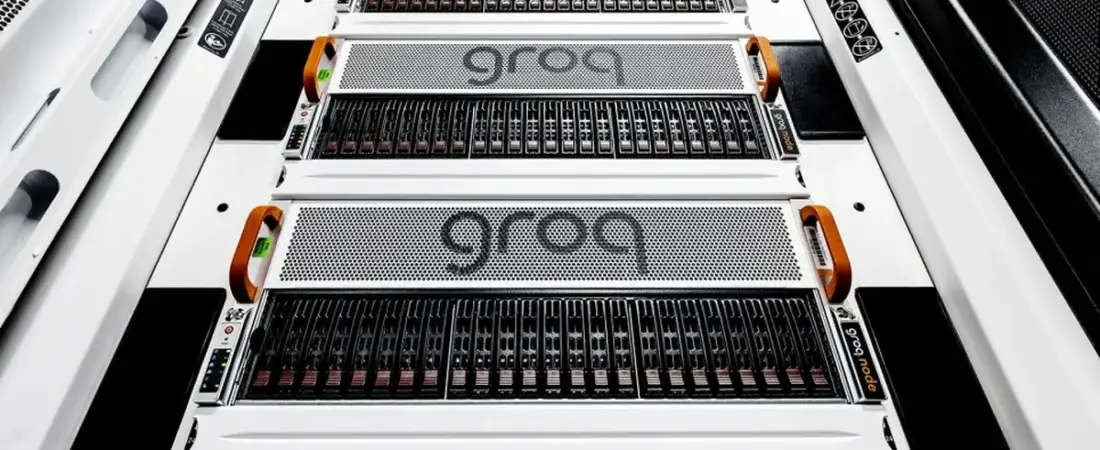
NVIDIA Groq 3 LPX has entered full production as a specialized inference accelerator designed to extend the Vera Rubin platform for latency-sensitive agentic AI workloads. The August 24 announcement is significant for data center operators because NVIDIA is increasingly separating different phases of AI inference across specialized hardware rather than relying on one accelerator architecture to perform every task.
Nebius is the first AI cloud provider to announce adoption of the platform, with Groq also expected to become an early user. NVIDIA positions Groq 3 LPX alongside Vera Rubin NVL72 systems, with Rubin handling large-scale context processing while LPX targets latency-sensitive token generation.
NVIDIA Groq 3 LPX: Key Takeaways
- Groq 3 LPX is in full production and optimized for rapid token generation.
- Nebius is the first AI cloud provider preparing to deploy the accelerator.
- The architecture separates context processing from latency-sensitive generation.
- Data centers must prepare for more heterogeneous compute, networking, power, and cooling requirements.
What NVIDIA Has Announced
According to the official NVIDIA announcement, Groq 3 LPX is now in full production and has been designed specifically to accelerate the generation phase of inference. Agentic AI creates a demanding workload because an application may reason, call tools, inspect results, write code, and iterate across hundreds or thousands of steps.
Each of those steps can require token generation. Even relatively small delays can therefore accumulate across a long-running agent workflow.
NVIDIA says an Artificial Analysis benchmark running the open-source Gemma 4 31B model with a 100,000-token context measured approximately 3,400 output tokens per second on NVIDIA Groq 3 LPX. The company says this was around four times faster than the nearest alternative platform in that test.
The result is vendor-reported performance based on an external benchmark and should not be treated as a universal measure of every inference workload. Real-world performance will depend on model architecture, context size, batching, software, and service design.
Inference Is Splitting Into Different Compute Problems
The more important technical development is the architecture behind the benchmark.
Large-model inference contains different computational phases. Prefill processes the user’s prompt and existing context, while decode generates output tokens sequentially. The two stages place different demands on hardware.
Context processing benefits from large-scale parallel compute and memory bandwidth. Decode places far greater emphasis on latency because tokens are produced iteratively.
NVIDIA is therefore positioning Vera Rubin and Groq 3 LPX as complementary resources. Rubin GPUs can process large contexts, while LPX accelerates token generation.
This is an example of disaggregated inference: different hardware resources are assigned to portions of the workload they can execute most efficiently. It also reinforces the wider shift toward AI factories built as integrated computing systems.
Why Agentic AI Changes The Economics
For a basic chatbot interaction, a user may submit one prompt and receive one answer. An AI agent can perform much more work before returning a result.
It may inspect data, call multiple software tools, execute code, evaluate intermediate results, and repeat those operations. That increases the number of inference steps and therefore the amount of computing infrastructure required to serve a single user request.
For AI cloud providers, that makes latency and cost per token commercially important.
A system that generates tokens faster can potentially complete more agent tasks using the same physical infrastructure. Conversely, poor decode performance can leave users waiting even when substantial GPU capacity is available elsewhere in the system.
The infrastructure metric therefore shifts from simply counting installed accelerators toward measuring how much useful intelligence those accelerators produce.
Nebius Is The First AI Cloud Adopter
Nebius plans to deploy NVIDIA Groq 3 LPX through its Token Factory inference platform. The company says developers will be able to access the accelerator through the same API environment used for its existing inference services. Nebius provides more deployment detail in its Groq 3 LPX adoption announcement.
That is important because specialized acceleration is most useful when customers do not have to redesign applications around each new hardware platform.
For cloud providers, orchestration software becomes critical. The platform must determine which hardware should perform context processing, which should perform decode, how workloads are scheduled, and how capacity is shared across users.
The Data Center Becomes More Heterogeneous
Groq 3 LPX also points toward increasingly heterogeneous AI data centers.
Future AI factories may combine GPUs, CPUs, LPUs, DPUs, custom XPUs, storage accelerators, and multiple classes of networking within the same production environment.
NVIDIA’s Vera Rubin platform already reflects this direction. The company combines Vera CPUs, Rubin GPUs, BlueField-4 DPUs, Spectrum-X Ethernet, storage systems, and NVIDIA Groq 3 LPX as parts of a larger rack-scale architecture.
For data center managers, heterogeneous compute creates operational consequences. Different accelerators can have different rack layouts, power profiles, cooling requirements, network dependencies, failure modes, and utilization patterns.
The facility increasingly needs to support an evolving mix of computing technologies rather than one standardized server design. Higher-density hardware also makes closed-loop liquid cooling planning more strategically important.
Why Networking Still Matters
Specialized inference hardware does not remove the network from the performance equation.
Disaggregating workloads means data must move efficiently between different computing resources. Context processing, token generation, storage access, and application services can all sit on different parts of the infrastructure.
NVIDIA is pairing Vera Rubin systems with Spectrum-X Ethernet and BlueField infrastructure to support those transfers while maintaining performance isolation and observability.
If data movement becomes slower than computation, specialization can simply move the bottleneck elsewhere. Infrastructure teams should therefore coordinate accelerator plans with their 800G Ethernet and AI networking strategy.
Seven Planning Priorities For Data Center Leaders
- Measure end-to-end latency: evaluate complete agent workflows rather than isolated accelerator benchmarks.
- Model cost per useful token: include utilization, networking, energy, cooling, and orchestration overhead.
- Plan heterogeneous racks: account for different power densities, physical layouts, and service procedures.
- Validate network performance: confirm that data movement will not erase gains from specialized processors.
- Test software portability: determine how easily applications can move between accelerator types and cloud services.
- Design for failure: ensure schedulers can reroute inference stages when hardware or network resources become unavailable.
- Track production results: compare vendor benchmarks with utilization and latency observed under real workloads.
What Happens Next
The immediate test will be how NVIDIA Groq 3 LPX performs in production environments once Nebius and other customers deploy it at scale.
Operators should watch several factors beyond peak token-generation speed: utilization, power efficiency, software integration, failure handling, scheduling efficiency, cost per token, and performance across different model architectures.
The broader trend is already visible. AI infrastructure is moving toward specialization.
Instead of asking which single accelerator should power an AI data center, infrastructure architects may increasingly ask which combination of processors produces the best result for each stage of the workload.
- How AI factories are changing data center infrastructure
- NVIDIA AI server prices and 2027 infrastructure costs
- 800G Ethernet planning for AI data centers
- Closed-loop liquid cooling for high-density AI systems
- AI data center microgrid design priorities
NVIDIA Groq 3 LPX Frequently Asked Questions
What is NVIDIA Groq 3 LPX?
NVIDIA Groq 3 LPX is a specialized inference accelerator designed to increase token-generation speed for latency-sensitive agentic AI applications.
How does Groq 3 LPX work with Vera Rubin?
Vera Rubin provides large-scale context processing and general AI compute, while LPX is positioned to accelerate the sequential token-generation stage of inference.
Who will deploy Groq 3 LPX first?
Nebius is the first announced AI cloud adopter and plans to offer the accelerator through its Token Factory inference platform. Groq is also expected to be an early user.
Why does this matter for data centers?
Specialized acceleration increases hardware diversity. Operators must coordinate compute with power, liquid cooling, networking, monitoring, scheduling, and failure-recovery requirements.
Conclusion
NVIDIA Groq 3 LPX is notable because it treats token generation as a distinct infrastructure problem.
Agentic AI makes that distinction commercially important. When applications perform hundreds or thousands of inference steps, latency can multiply across the entire workflow.
For data center leaders, the larger lesson is that AI factories are becoming heterogeneous computing systems. GPUs remain central, but increasingly specialized processors, networks, storage platforms, and orchestration software will determine how efficiently those GPUs are used.
The next infrastructure competition may therefore be less about owning the fastest individual chip and more about assembling the most productive combination of compute.