
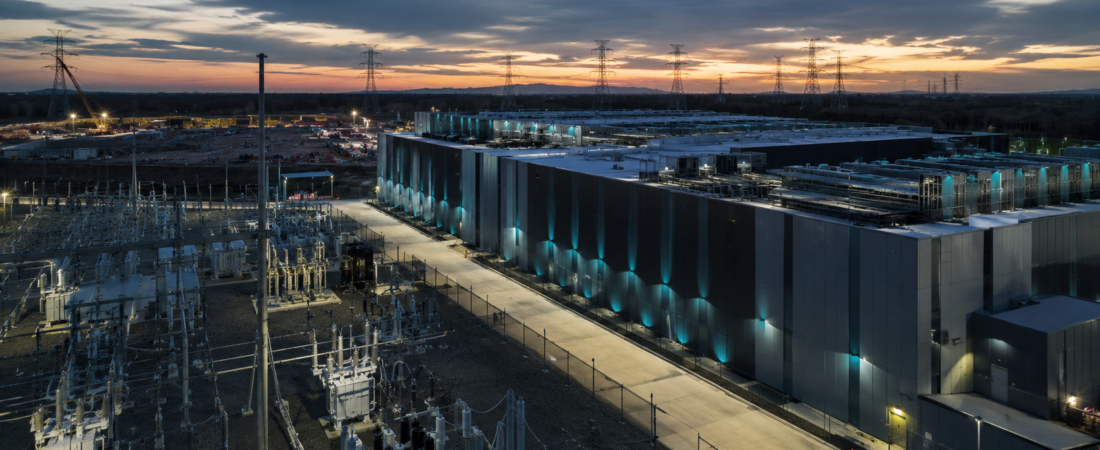
NEXTDC FY26 results show record contracted data center capacity as cloud and AI demand drives the Australian operator into its largest construction program to date. Pro forma contracted utilization reached 740.1MW, up 202% year over year, while the company’s forward order book expanded to 565.1MW.
The figures highlight a widening gap between capacity already generating revenue and infrastructure customers have contractually reserved for future delivery. Billing utilization stood at 175MW at the end of June, meaning NEXTDC now faces the operational challenge of converting hundreds of contracted megawatts into completed, energized data center capacity.
NEXTDC FY26 Results: Key Takeaways
- Pro forma contracted utilization reached 740.1MW, an increase of 202% year over year.
- The binding forward order book grew to 565.1MW, excluding options and other nonbinding demand signals.
- FY27 capital expenditure is expected to reach between A$5.25 billion and A$5.75 billion.
- Approximately 197MW is expected to begin billing in FY27, followed by another 221MW in FY28.
- The planned M5 Melbourne campus could ultimately support as much as 1.2GW of IT capacity.
NEXTDC FY26 Capacity Snapshot
| Metric | FY26 figure | Why it matters |
|---|---|---|
| Contracted utilization | 740.1MW | Shows binding demand at unprecedented scale |
| Billing utilization | 175MW | Represents capacity currently producing revenue |
| Forward order book | 565.1MW | Defines the future delivery requirement |
| FY26 capital expenditure | A$3.397 billion | Reflects accelerating construction |
| FY27 capital expenditure guidance | A$5.25–A$5.75 billion | Signals the largest program in company history |
Together, these numbers show that demand visibility is improving rapidly, but successful execution will depend on synchronized delivery across power, cooling, networking, construction and financing.
Contracted Capacity Reaches 740MW
According to the NEXTDC Investor Centre, NEXTDC reported FY26 total revenue of A$496.5 million, up 16%, with net revenue rising 16% to A$405 million. Underlying EBITDA increased 15% to A$248.8 million.
The more significant infrastructure number is contracted utilization. It increased from 244.8MW to 740.1MW on a pro forma basis, while the forward order book grew 322% to 565.1MW.
NEXTDC says the forward order book contains binding contracted commitments and excludes options, reservations, letters of intent, memoranda of understanding and its broader sales pipeline.
That distinction matters in a market filled with multi-gigawatt announcements. Contracted capacity is not yet operating capacity, but it provides considerably stronger demand visibility than a speculative development proposal. It also gives suppliers, contractors and investors a clearer basis for planning long-lead infrastructure.
Capital Spending Is Accelerating
Turning those commitments into operating infrastructure is expensive.
NEXTDC invested A$3.397 billion during FY26, approximately double the prior year’s capital expenditure and above its previous guidance range. The company attributes the increase partly to accelerated construction required to meet contracted customer delivery dates.
For FY27, NEXTDC expects capital expenditure of between A$5.25 billion and A$5.75 billion, the largest capital program in the company’s history.
Approximately 197MW of the forward order book is expected to begin billing during FY27, followed by another 221MW during FY28. Those delivery windows put pressure on every part of the project chain, from permitting and civil works to grid connections, switchgear, chillers and high-density computing systems.
A 1.2GW Melbourne Site Shows the Direction of Travel
NEXTDC is also preparing for demand beyond its existing contracts.
The company has acquired a site for M5 Melbourne and says planning work is beginning for a facility capable of supporting up to 1.2GW of IT capacity.
Elsewhere, S4 Sydney has been expanded to a planned 365MW, with 250MW in progress and another 115MW in planning. NEXTDC had 537MW of capacity under development at the end of FY26 and more than 240MW of additional developments in planning.
These projects demonstrate how quickly colocation capacity requirements are moving from tens of megawatts toward hyperscale campus designs measured in hundreds of megawatts or more. The trend also increases the importance of disciplined AI-ready data center operations, because larger campuses create more complex commissioning, resilience and maintenance requirements.
Power Policy Is Becoming Part of the Growth Risk
The expansion is occurring while Australian regulators reconsider how large data center loads connect to electricity networks.
NEXTDC says proposed reforms in New South Wales and at the national level could introduce requirements involving network charges, financial guarantees, renewable-energy procurement and firming.
The company says its operating portfolio and current 565MW forward order book are unaffected by the proposed reforms, and that power arrangements are already in place across contracted capacity as projects progress through delivery.
For operators, the broader issue is clear: winning a hyperscale customer no longer completes the commercial challenge. Developers must also secure power, grid connections, financing, electrical equipment, cooling systems and construction capacity quickly enough to meet contractual delivery dates. Data Center Insider’s guide to power-first data center site selection explains why electricity availability increasingly shapes deployment strategy.
AI and Cloud Demand Are Driving the Pipeline
NEXTDC identifies AI, cloud providers, hyperscalers, neoclouds, enterprises and technology partners among the sources of demand behind its outlook.
The company expects FY27 net revenue of A$615 million to A$640 million and underlying EBITDA of A$385 million to A$410 million, both representing growth of more than 50% at the respective guidance midpoints.
Those forecasts remain forward-looking and depend substantially on delivering contracted capacity on schedule. The conversion of contracted megawatts into billing utilization will therefore be one of the most important measures for assessing progress during the next two financial years.
What Data Center Leaders Should Watch
Infrastructure executives should look beyond headline capacity announcements and track practical delivery indicators. These include the timing of grid energization, equipment lead times, construction milestones, commissioning progress and the rate at which contracted capacity begins producing revenue.
Operators should also assess whether supply chains can scale with customer commitments. High-voltage equipment, backup power systems, direct-to-chip cooling infrastructure and skilled technical labor can all become constraints when multiple large campuses are developed at once.
Finally, the financing requirement deserves attention. A record order book supports long-term growth, but the capital must be deployed before much of the related revenue arrives. Maintaining delivery discipline while controlling costs will be central to the economics of the program.
Frequently Asked Questions About the NEXTDC FY26 Results
How much contracted capacity did NEXTDC report?
NEXTDC reported pro forma contracted utilization of 740.1MW at the end of FY26, up 202% year over year.
How large is NEXTDC’s forward order book?
The forward order book reached 565.1MW. NEXTDC says this figure includes binding contracted commitments and excludes options, reservations, letters of intent and its broader sales pipeline.
How much does NEXTDC expect to invest in FY27?
The company expects FY27 capital expenditure of between A$5.25 billion and A$5.75 billion as it works to deliver contracted capacity.
When is the contracted capacity expected to begin billing?
Approximately 197MW is expected to begin billing during FY27, followed by another 221MW during FY28, according to the company’s outlook.
Conclusion
The NEXTDC FY26 results demonstrate that the AI infrastructure boom is moving beyond proposed campuses into binding requirements for physical data center capacity.
The challenge now shifts from sales to execution.
A 565MW forward order book requires far more than empty data halls. It requires power, cooling, networking, equipment, skilled labor and billions of dollars of construction to arrive on synchronized schedules.
For data center leaders, that may be the most important lesson from the NEXTDC FY26 results: in the current market, demand is no longer the only scarce resource. The ability to deliver contracted megawatts is becoming a competitive advantage of its own.