
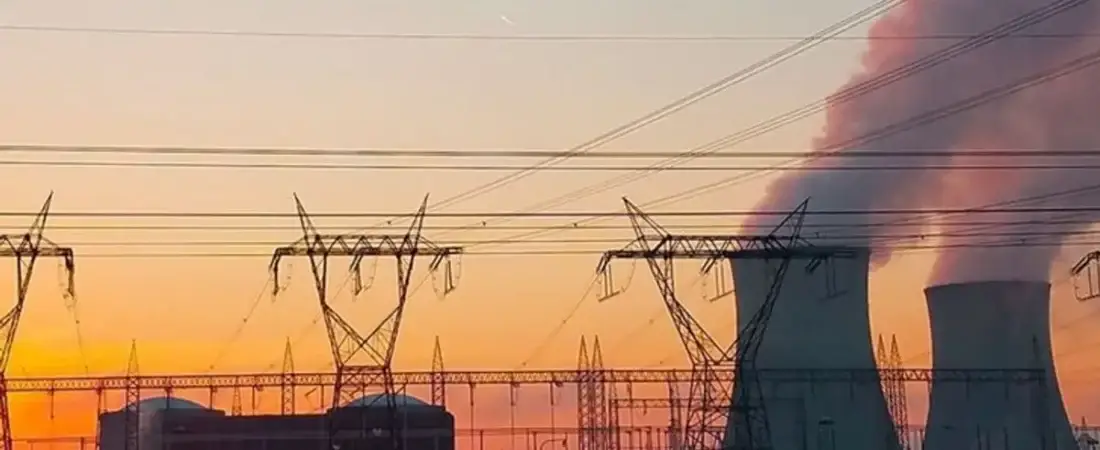
The TVA data center rate introduces dedicated electricity pricing and capacity-commitment charges for large digital-infrastructure customers as computing demand puts greater pressure on generation and grid infrastructure across the utility’s seven-state service territory. The new structure is designed to make data centers bear more of the costs created by their power requirements instead of shifting those costs to households and other businesses.
The Tennessee Valley Authority board approved the changes on August 20 alongside its 2026 Integrated Resource Plan and fiscal 2027 budget. For operators, the decision is significant because electricity pricing is increasingly being redesigned around the unusual scale, growth rate, and infrastructure requirements of AI and hyperscale facilities.
Executive Summary
- TVA is moving data centers away from manufacturing rates and into dedicated rate classes.
- The utility expects the average data center electricity bill to rise by approximately 10%, phased in over three fiscal years.
- New large-load customers will face capacity-commitment charges tied to infrastructure built to serve their projects.
- The policy aims to protect existing ratepayers from generation and grid costs created by unusually large new loads.
- Data center developers must now evaluate tariffs, minimum commitments, infrastructure contributions, and energization schedules much earlier in site selection.
What TVA Has Approved
TVA says it is modifying its wholesale rate structure to better align charges with the cost of serving rapidly growing data center demand. Its official board update confirms that directors modified wholesale rates while approving the fiscal 2027 budget and the recommendations in the 2026 Integrated Resource Plan.
Under the new approach, data centers will move away from the manufacturing rate structure and into dedicated rate classes. TVA officials said the transition is expected to increase the average electricity bill for data center customers by approximately 10%, phased in over three fiscal years.
New large-load customers will also face capacity-commitment charges intended to help fund the generation and grid infrastructure required to serve their projects. The policy is part of a broader effort to ensure that large power users contribute directly to the investment needed to connect them.
The TVA data center rate therefore changes more than the monthly electricity bill. It also changes how developers must account for the cost and risk of reserving capacity long before a campus reaches full utilization.
Why Data Center Power Pricing Is Changing
Data center electricity demand is developing much faster than the load growth utilities traditionally planned around. AI campuses can require hundreds of megawatts, while some proposed developments are measured at gigawatt scale.
Connecting loads of that size may require new substations, transmission infrastructure, generation capacity, transformers, and other long-lead equipment. Those assets can demand substantial investment years before the first building reaches full capacity.
That creates a central financial question: who pays if a developer reserves a large block of power but ultimately uses less electricity than forecast? The capacity-commitment element of the TVA data center rate attempts to place more of that risk with the large-load customer.
TVA’s 2026 Integrated Resource Plan material identifies population growth and data center growth as primary drivers of increasing electricity demand. That link between long-term resource planning and customer-specific rate design is becoming increasingly important throughout the data center market.
7 Critical Cost Risks Created by the TVA Data Center Rate
| Risk | Why It Matters | Planning Response |
|---|---|---|
| Higher tariffs | Average data center bills are expected to rise over the three-year transition. | Model the complete tariff rather than relying on a headline energy price. |
| Capacity commitments | Reserved power may create charges before a campus is fully utilized. | Align contracted capacity with realistic construction and customer ramps. |
| Grid contributions | Large loads may trigger costly transmission, substation, or generation work. | Identify project-specific infrastructure responsibilities early. |
| Energization timing | Paying a higher rate does not automatically guarantee rapid delivery. | Connect commercial milestones to credible utility schedules. |
| Utilization shortfalls | Slower deployments can leave the customer paying for unused capacity. | Stress-test downside scenarios and phased energization options. |
| Reliability requirements | AI facilities need dependable power as well as large quantities of it. | Evaluate redundancy, backup generation, and data center microgrid options. |
| Site comparison errors | Low electricity prices can hide connection and commitment costs. | Compare sites using total delivered power cost and risk. |
These risks make the TVA data center rate a strategic development issue, not merely an operating-expense adjustment. A project can appear competitive during early site screening but become uneconomic once dedicated tariffs, capacity obligations, and infrastructure costs are included.
The Ratepayer Issue Is Becoming a National Development Constraint
The TVA decision reflects a wider shift in the U.S. data center market. States, utilities, regulators, and local communities increasingly question whether the costs of generation and grid expansion required for AI infrastructure should be spread across existing electricity customers.
For developers, this creates a new dimension in site-selection economics. A market with inexpensive electricity may become less attractive if dedicated tariffs, infrastructure charges, or minimum capacity commitments substantially increase the cost of securing power.
The reverse can also be true. Paying more for electricity may remain commercially preferable if the utility can provide a credible route to large-scale capacity on the required timetable. For AI infrastructure, speed-to-power increasingly matters alongside price per kilowatt-hour.
This same convergence of power costs, permitting, and local accountability is visible in Pennsylvania’s data center rules. It also reinforces why power availability now dominates data center site selection.
TVA Is Planning for Much Higher Electricity Demand
The rate change arrives as TVA prepares its system for substantial load growth. The federally owned utility serves approximately 10 million people across Tennessee and portions of Alabama, Mississippi, Kentucky, Georgia, North Carolina, and Virginia.
Its planning process addresses rising demand from data centers and other large industrial customers while considering the generation and grid infrastructure required to maintain reliability. This creates a difficult balancing act: the region wants to attract major technology investment, but infrastructure commitments for rapidly evolving AI projects can create financial and operational risk.
Dedicated tariffs give utilities another mechanism for managing that risk. They can connect the cost of new infrastructure more directly to customers whose demand causes the investment, while making project sponsors demonstrate a firmer commitment to their requested capacity.
What the TVA Data Center Rate Means for Operators
The most important implication for executives is that power procurement can no longer be treated as a straightforward utility contract signed late in development. Large projects need to understand rate design, infrastructure contributions, capacity guarantees, minimum commitments, energization schedules, and possible curtailment requirements before a site is financially viable.
Operators evaluating the TVA territory should take five actions:
- Model total delivered power cost. Include tariffs, demand charges, capacity commitments, grid contributions, and backup-power expenses.
- Validate the load ramp. Match committed megawatts to realistic construction, commissioning, customer, and equipment-delivery schedules.
- Define infrastructure ownership. Establish who pays for and controls substations, transmission connections, and other dedicated facilities.
- Stress-test slower growth. Quantify the cost of paying for reserved capacity if the campus scales later than planned.
- Compare schedule certainty. Evaluate whether a higher-priced market offers a more credible route to energization than lower-cost alternatives.
An apparently inexpensive market can become costly when developers must fund major upgrades or carry unused committed capacity. Conversely, accepting a higher tariff can make sense when it provides dependable access to power that competing markets cannot offer.
What Happens Next
The revised structure will be phased in over the next three fiscal years, giving existing data center customers time to move onto the new rates. Developers considering new large-load projects should expect capacity commitments to become part of early commercial negotiations.
The broader question is whether dedicated large-load tariffs become standard across more U.S. utility territories. As AI infrastructure expands, utilities will face pressure to show that new data centers strengthen regional economies without forcing households and conventional businesses to finance the grid investment those facilities require.
Operators can place the policy in a wider infrastructure context by reviewing how OpenAI is contracting power-linked capacity in Ohio, how the NVIDIA Cloverleaf investment joins compute and energy development, and why data center outage-prevention procedures remain essential after a facility is energized. Together, these developments show that commercial power strategy, physical resilience, and AI computing architecture must be planned as one system.
Frequently Asked Questions
What is the TVA data center rate?
The TVA data center rate is a dedicated wholesale pricing approach for large digital-infrastructure customers. It separates data centers from manufacturing rate classes and introduces charges more closely aligned with the cost of serving their large electricity loads.
How much could data center electricity bills increase?
TVA officials said the transition is expected to increase the average electricity bill for data center customers by approximately 10%, phased in over three fiscal years. The effect on a specific project will depend on its load profile and commercial arrangements.
What are capacity-commitment charges?
Capacity-commitment charges help allocate the financial risk of infrastructure reserved or built for a large customer. They can protect other ratepayers if a proposed data center uses less electricity than anticipated or develops more slowly than planned.
Does the new rate make the TVA region unattractive?
Not necessarily. A higher electricity cost may be acceptable when it comes with a credible route to large-scale, reliable power. Operators should compare total delivered cost, capacity certainty, infrastructure obligations, and schedule risk across candidate markets.
Conclusion
The TVA data center rate is another sign that the economics of hyperscale development are changing alongside the technology. Developers once concentrated heavily on low electricity prices and tax incentives. The next phase places greater emphasis on who pays for generation, substations, transmission, and capacity reserved years before servers arrive.
For data center leaders, the implication is clear: the cost of electricity and the cost of obtaining electricity are becoming two different numbers. Projects that treat tariff design and capacity risk as early site-selection criteria will be better positioned to avoid expensive surprises.